
Good at using AI. Then what?
I started by asking what one computer could do. Now AI can help us do so much. How much are our own intelligence, our understanding of life, and our relationships with other people growing along with it?
When I was studying computer science, I skipped classes to give IT talks at schools in other provinces. I went looking for problems to work on, for projects my lecturers hadn't assigned. I wanted to find out what we could do with one computer. That became a project to share knowledge from the city with rural areas, called DO IN THAI. And it became the company I still work in today.
Once I started working with people, I found myself learning all over again. What I knew about computers had to meet people's actual lives. Their thinking, beliefs, relationships, and problems that we couldn't just go and fix, even when we knew how. Some work took years of waiting. Waiting to find people who wanted to do the same thing, waiting until we understood one another well enough, waiting for something we had worked on together to begin making a difference in someone's life.
Computers can do so much more now. AI helps us read, write, analyse, and finish work that used to take days much faster. That's good, isn't it? I would like to get more done and be less tired too.
But as the machine does more, we need to look at ourselves more often as well. The work looks better, but how much better do we understand what we are doing? If someone asks why we think this way, can we explain? If we put it to use and it doesn't turn out as expected, will we know where to go back and make changes?
We can ask this of anyone, including me, someone who has studied and worked with computers all along. A very capable assistant might help us learn things we never had the chance to learn before. It might also mean we gradually stop making the effort to understand things for ourselves.
A three-legged stool
I think of living with technology as a three-legged stool. Use it with purpose. Use it with a real understanding of it. Stay aware and keep adapting. All three need to go together. We may be very good at using a tool, but if we still don't know what we are using it for, it would be hard to take that ability as a measure of how well our lives are going.
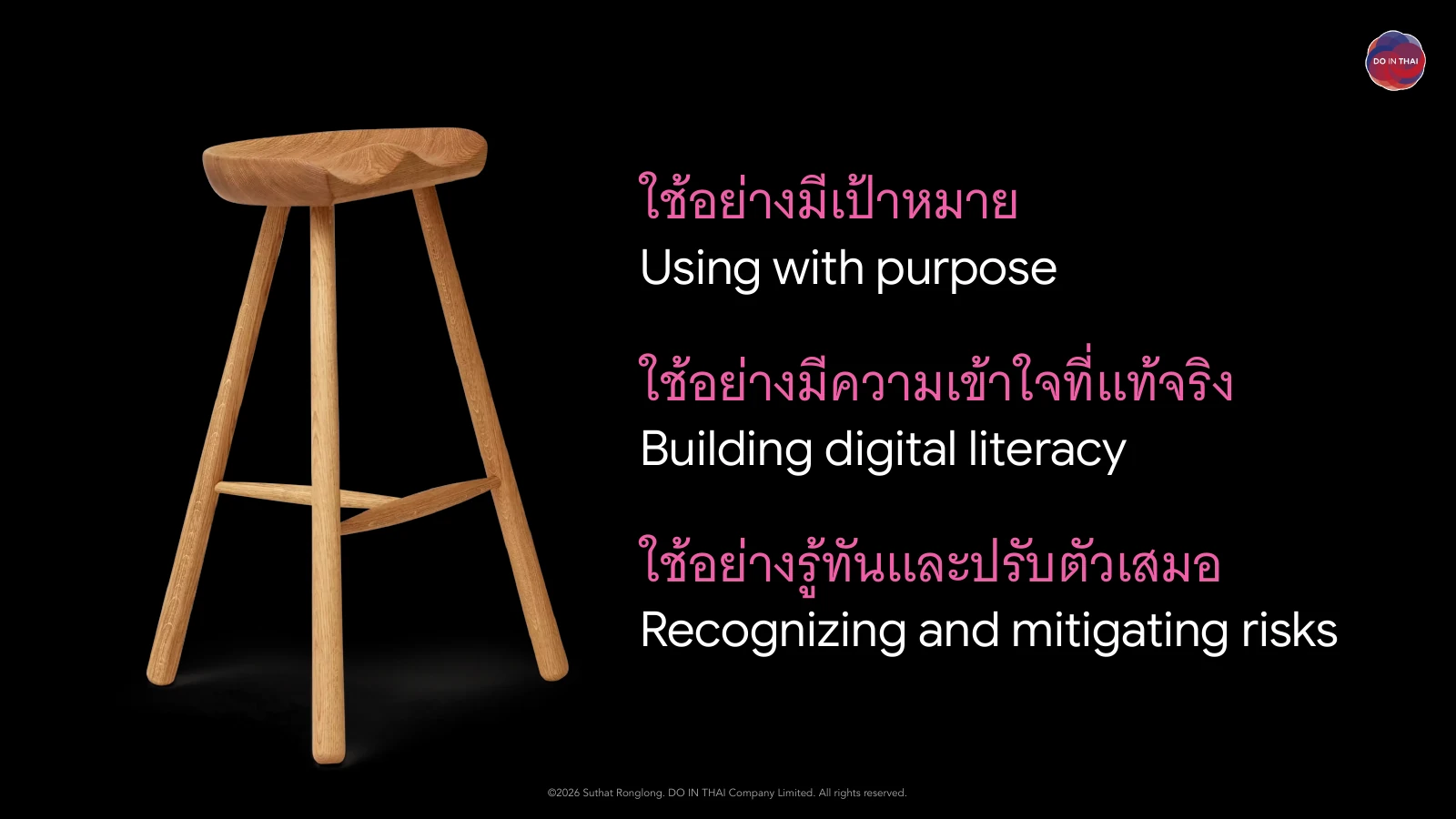
Having a purpose means first knowing what we want to do with our lives and the work in front of us. Some things we want finished quickly. Some we want to do better. Sometimes we want help learning something we don't yet understand. Those purposes already mean different ways of using AI. A task we just need finished and a task we want to learn how to do can't all be handed to the machine in the same way.
Understanding has to include the nature of AI too. How does it work? What data does it use? What are its limits? How can we check what it has done for us? In a world of virtual reality and things that merely seem real, we need to pay attention to both the machine and ourselves. Sometimes we believe an answer easily because it sounds good. Sometimes we believe it because it agrees with what we already want to believe. Fixing the machine alone probably won't be enough for that second one.
Adapting also means accepting that what we understand today may not be enough. A method that used to work may need to change. Some things we were very sure about may need learning all over again. However long we have been working, we can still have days when we don't know what to do.
This is how I think about AI fluency. We can live with it, work with it, understand enough to make decisions, and keep learning when things change. Of course, that takes longer to practise than learning how to use one tool.
Learning about AI, coming back to people
During 2024–2025, I also took part in the work of a UNESCO committee concerned with this subject. Looking back at my own work, I became more interested in how we could preserve and develop Human Intelligence (HI) as machines become more capable.
One framework I want to talk about is the European Commission and OECD's AILit Framework, the May 2025 review draft.1 It builds on several earlier efforts, including UNESCO's AI competency framework.2 It was developed for primary and secondary education. But reading it, I find plenty of homework for working adults like us too. Age and experience don't make us understand AI automatically.
It covers four domains: using AI and evaluating what we get from it (Engaging with AI), making things with AI (Creating with AI), deciding which parts of the work AI should do and how we will oversee it (Managing AI), and designing and developing AI systems (Designing AI).
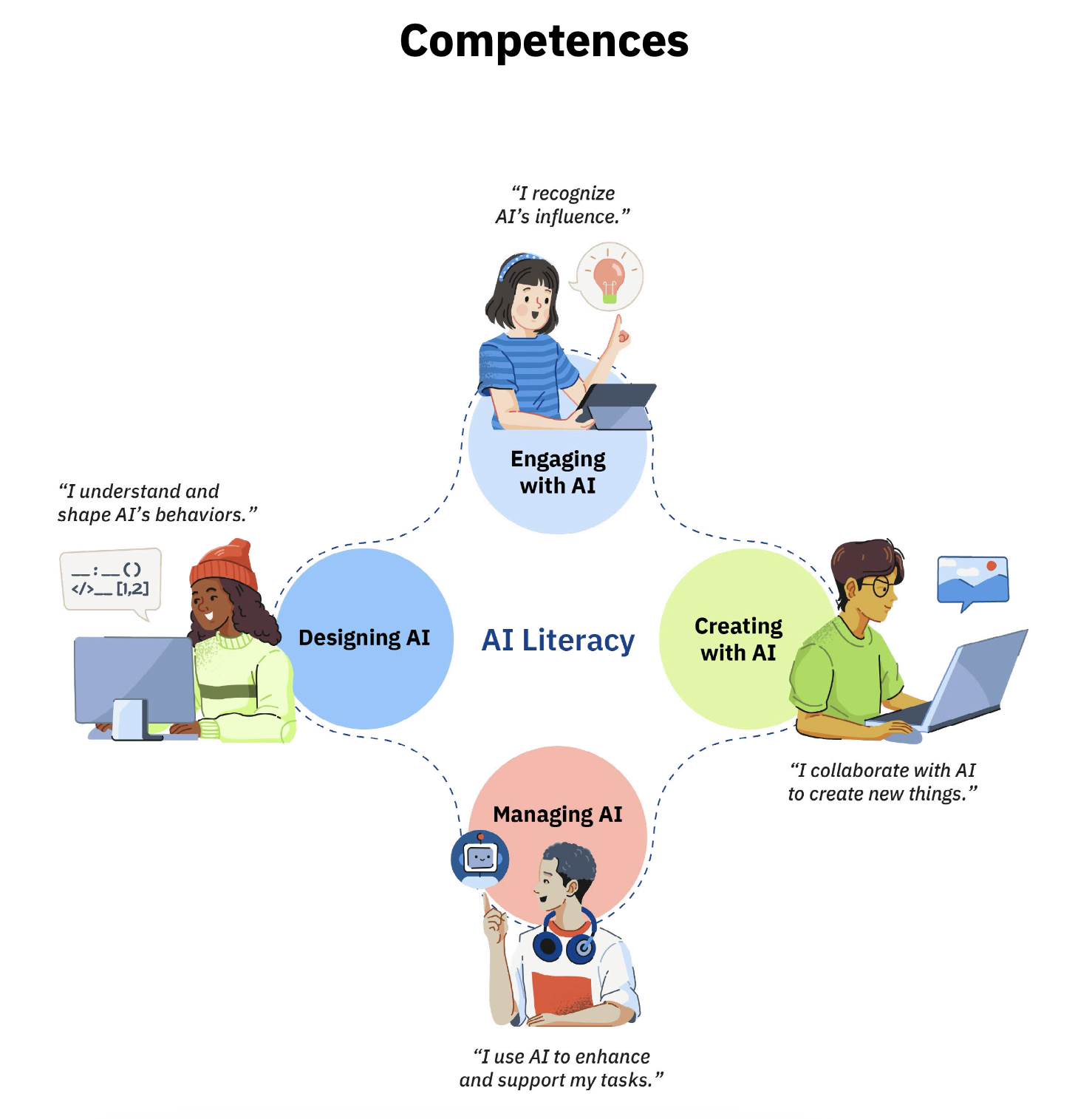
AI Literacy Framework — OECD (2025). View full-size image
In practice, we may need several of these in the same piece of work. When we ask AI to help us think through a task, we need to explain the problem, read what it proposes and judge how much we can use. Choose some things, leave others, try something and come back to change it. We also need to know where to go and find more information ourselves. If we are developing the system, there is more to think about: how will the data we choose and the way we design it affect the people who use it?
Look at it this way, and learning AI gives us much more to practise than writing prompts that return an answer we like. Especially our own decisions, from the beginning of the work to the end.
The same framework brings Knowledge, Skills and Attitudes together. Knowledge helps us understand AI's nature, capabilities and limits, as well as the people behind its creation. Skills include thinking, communicating, working with others and solving problems. How well we use AI also has to do with our responsibility, curiosity, willingness to try new things, adaptability and understanding of other people.
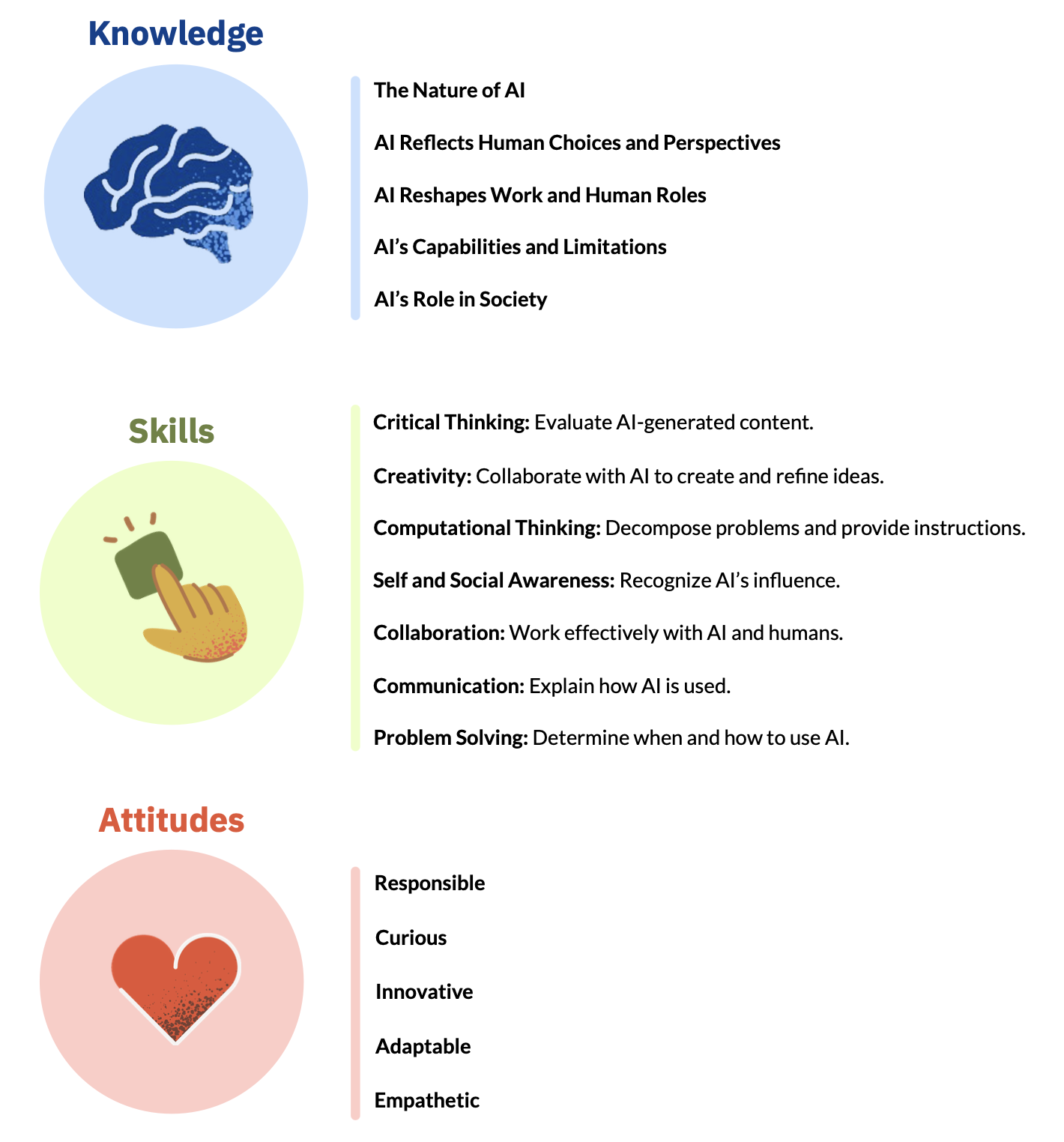
Knowledge, Skills and Attitudes — adapted from OECD (2025). View full-size image
For me, the foundations we need to practise a lot are critical thinking, computational thinking and analytical reasoning. When we meet a problem, can we work through its parts? Do we know what relates to what? Do we have enough information to reach that conclusion? What have we simply assumed? If we can't think these things through yet, having plenty more answers to choose from may still leave us unsure what to base a choice on.
Understanding other people matters a lot in our work too. We may know a lot, analyse well and have good tools. But if we don't listen to the people we are going to work with, don't understand what worries them, or use our own past success to decide what they should do, the work is still difficult to move forward. We have to learn these things by being with people. Trying to do things together, falling out sometimes, coming back to look at ourselves. That is how we gradually understand more.
Knowing how to use it includes knowing when not to
There is one competency in the framework I particularly like: deciding whether or not to use AI, based on the nature of the task.1 It sounds simple, but it asks us to think with our knowledge, skills and sense of responsibility all at once.
One example is making a birthday card. Write it ourselves, or ask AI to help? If the only question is which way is faster, the answer probably isn't difficult. But what if we want to spend time thinking about someone? Think back over what we have been through together in the past year, remember something we haven't thanked them for yet. Sitting down and slowly writing the card can mean something to the person writing it too. The writing doesn't have to be beautiful. We don't have to be good with words. Just let it be what we really want to tell them.
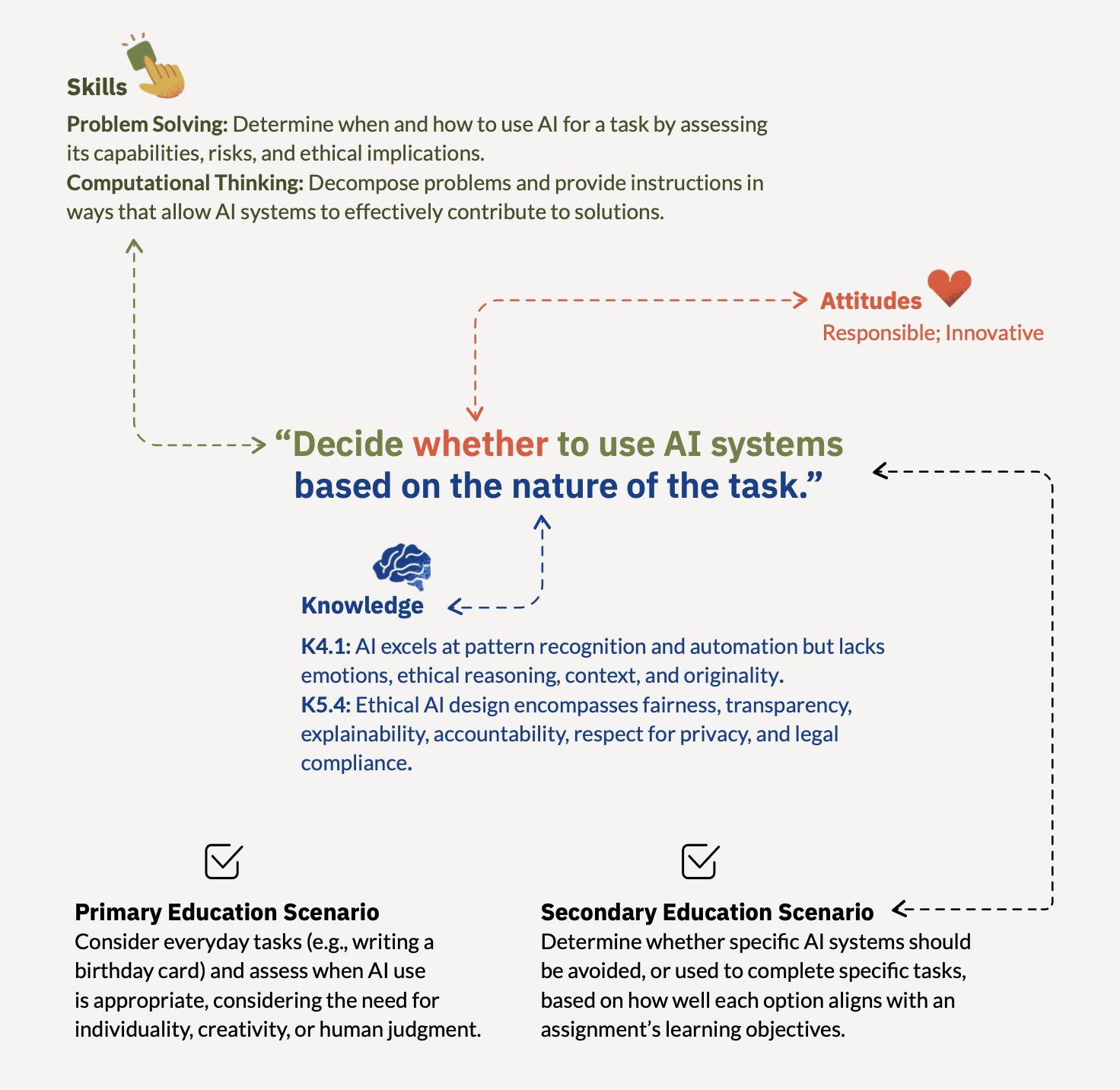
Deciding whether to use AI — OECD (2025), Review Draft. View full-size image
Work we don't yet know how to do is similar. If AI does it for us until it is finished, we get the work. How much understanding comes back to us is another matter. If we want to learn how, we probably need to think and try for ourselves, then use it to explain where we are stuck or check what we have tried. Sometimes this takes longer. We have to go back and read, go back and make changes, accept that what we first thought was wrong. But when something similar comes up again, we have some knowledge of our own to work with.
This reminds me of something my academic adviser gave me throughout my studies: freedom to fail. My adviser liked giving me difficult things to do, then helping find an environment where I had a chance of doing them. When I came to do my own work, I began to understand. We need somewhere to try, someone to ask, and the chance to make a mistake and still put it right. Then we can dare to do something we haven't done before.
With AI, I would like it to help here too. Help us learn difficult things, help us try things we didn't previously have anyone to help with. But the people around us still need to help make an environment where mistakes are accepted and we give one another time to learn. If everyone is only being rushed to hand in work that looks good, it is understandable that they would want the machine to just get it done.
Human with AI
In DO IN THAI's social development work, we keep asking ourselves whether what we do helps people become more able to carry on with their own work, as I wrote in When we step back, who carries on?. When we use AI, I still want to see the same thing. People with more knowledge, more confidence, and more energy to do what matters in their lives.
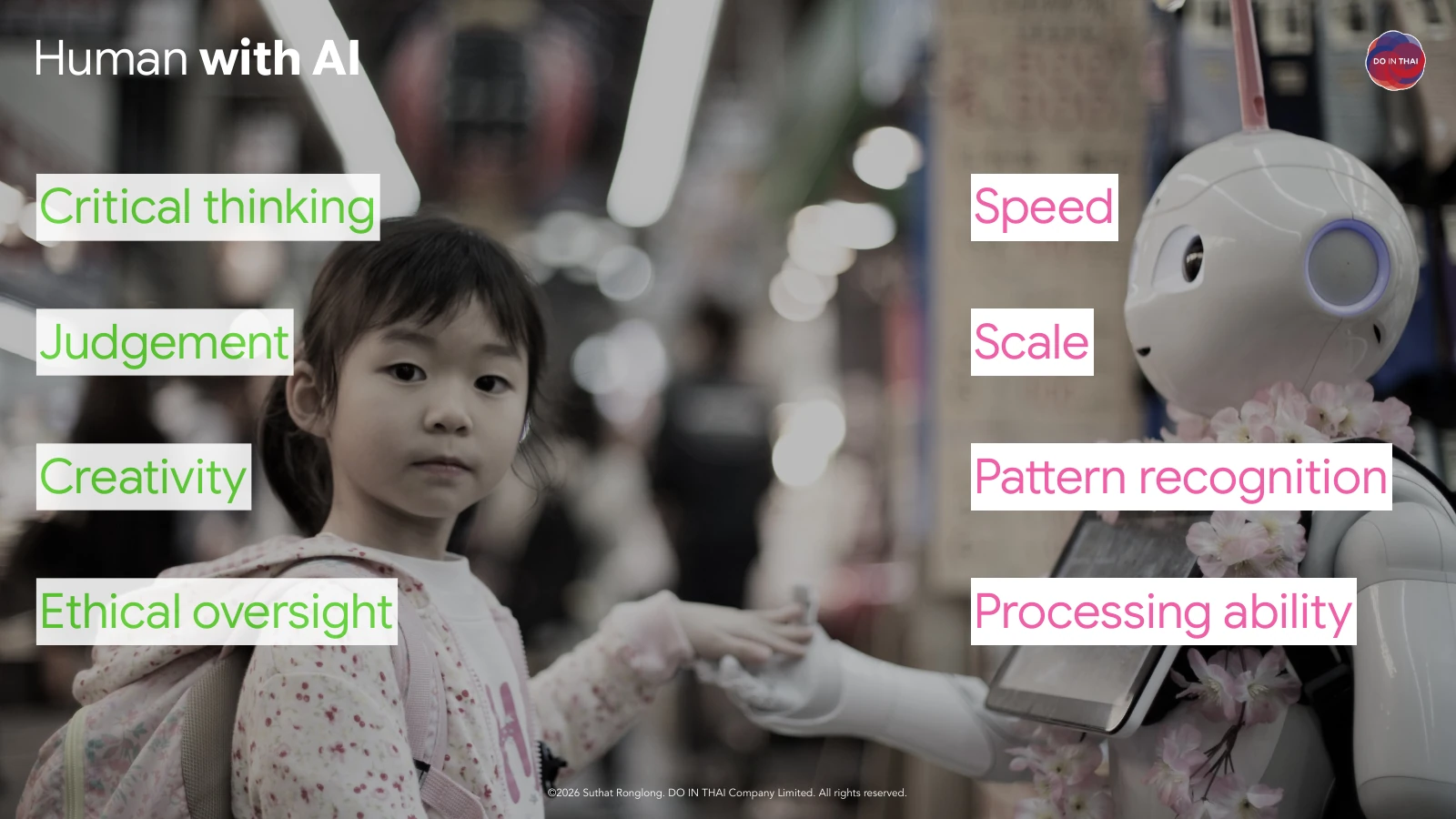
That is why Human with AI matters to me. Understanding and preserving Human Intelligence, alongside a deep understanding of the nature of AI. We can put the machine's speed, processing power and ability to find patterns in data to work in so many ways. At the same time, we need to keep practising our thinking, judgement, creativity and responsibility. When we put any of this to use, our own lives and other people's lives are involved.
We have worked on the digital divide for a long time. Now I am beginning to feel more and more concerned about the distance between people. People who use digital technology so much that they forget the importance of their actual lives, their relationships, and the people right there with them. However many more tools we have, if we still have no more time to care for one another, there is something we need to reconsider.
If AI helps us finish work faster, and we have time to sit and talk with the people we work with, hear something they haven't told us before, go home and eat with our family, or spend time on our own without immediately having to rush off and do something else, I think that is already a worthwhile return.
At some points in life, we just want enough energy to do the work we intended to do, and enough time to be with the people we love. If technology helps us do that, perhaps it gives me a little more of an answer to the question I have had since my student days. What can we do with one computer?
References
-
OECD (2025). Empowering Learners for the Age of AI: An AI Literacy Framework for Primary and Secondary Education. Review Draft, May 2025. Original illustrations by Abiyasa Adiguna. The three AILit figures reproduce or adapt material © OECD 2025 under CC BY-SA 4.0. 2
-
UNESCO (2024). AI competency framework for students.